
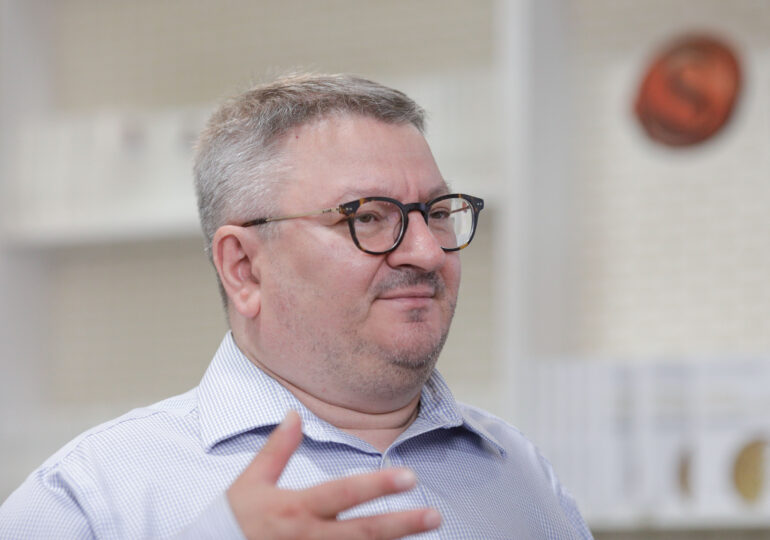
Armand Goșu teaches at the Faculty of Political Science of the University of Bucharest. He specializes in the history of the Russian Empire and the Soviet Union, being the author of several books about Vladimir Putin, as well as about the war in Ukraine.
In a discussion with spotmedia.ro, he expressed pessimism regarding the situation in Romania, stating that the parliamentary and presidential elections did not bring a change in the political regime. Influential power structures in society, such as the SRI, SIE, the military, and the judicial system, have retained their power, resources, and influence.
Representative quotes:
- Here, any smart politician starts a hybrid warfare and people fall for it.
- We see that six months have passed since the new president took office and we still don’t have a director at the SRI, and the old SIE director has not been replaced.
- The ones in power are not interested in Romania. They want to maintain their influence and privileges, to benefit themselves, to hell with the rest. If you don’t like it, you have a passport, leave!
- The best ones want to leave. However, there are still a few who want to join political parties, to enter the SRI.

I would start with the first question regarding how the ceasefire negotiations are unfolding. It could be said that the negotiations are more between Russia and America, with Ukraine being somewhat marginal in these discussions.
We don’t know how the negotiations are going. Public information is very scarce, it is based on sources in various American publications, but it is not something acknowledged.
President Putin held a lengthy press conference in which he stated that there is no question of a ceasefire until the Ukrainian army evacuates the Donetsk region. That is, those 25% of the Donetsk region where that fortification is located that the Russians cannot conquer and which the Ukrainians refuse to abandon, refuse to evacuate.
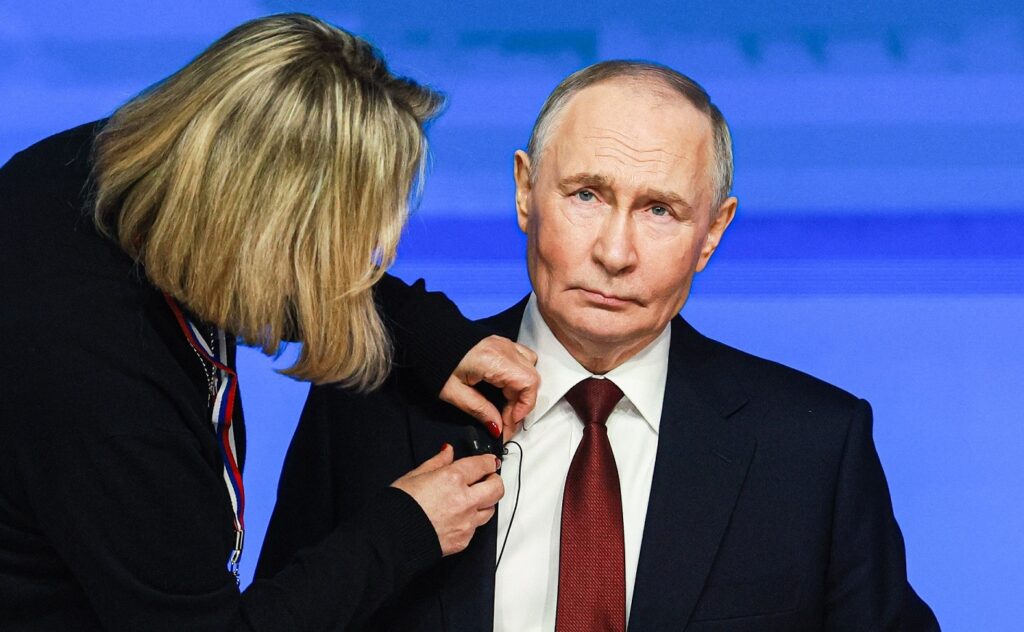
So, the response regarding the ceasefire negotiation is that, for now, Putin has a firm condition: the fire will not cease until the Ukrainians withdraw from there.
We know from the press reports, especially from the Ukrainian press, that there are difficulties in the Donetsk region at this moment. It seems that Pokrovsk has not been fully conquered by Russian forces. I would like to ask you about the strategic importance of that fortification line in Donetsk, why the Russians want the entire region so much, and why the Ukrainians are determined to defend it at such a cost?
That is their fortified line. The fortifications were built after 2014, at the beginning of the war. If you remember, at the beginning of the war in 2014, Sloviansk was occupied by the Russians, Kramatorsk was occupied by the Russians, then they were liberated by the Ukrainians.
After the liberation, in 2014, after the first and second Minsk agreements, Poroshenko consolidated that area, which is a very important strategic point for Ukraine. If you look at the map, you will see that if you leave Donetsk to the west, a plain, a steppe, opens up in front of you. You can advance straight on the ground, meaning, from the physical geography point of view, there are no relief formations to help you, to facilitate the establishment of defense points.
It is very important for the Ukrainians because they resist in that region. It's not about abandoning populations, as people can be evacuated. It has happened in other regions as well. The problem is as a support point, it is very complicated.
There, these assaults have been going on for a long time. Yes, they have been intense for a few months, for half a year. In the case of Pokrovsk, it has been going on since August last year, so for 15 months, for over a year.
Pokrovsk has not been fully conquered by the Russians even at this moment. It is mostly occupied. At the same time, there are still Ukrainian soldiers in Pokrovsk, quite a few, who still pose significant problems because they cannot be removed from there.
Pokrovsk was a city that, in its glory days, had 77,000 inhabitants. It was an important logistical strategic point because it was where supplies were made. However, due to the Russian advance, a few kilometers, its importance decreased. And in these 15 months, it has been announced numerous times that the city of Pokrovsk has fallen.
In this context, could you describe a bit what the sentiment is in Ukraine regarding the corruption scandal, the pressure on the eastern front, and these peace negotiations? So how can we look at Ukraine at this moment?
Even though I speak with people there daily, of course, each one lives in their own loop. There are people with political options, there are journalists from Kiev, there are foreign correspondents.
Politics in Ukraine has always been very intense, incomparably more intense than in Romania. There is a big battle there, with stakes, with opposition, with power, with accusations against the current administration of Zelensky that they are not doing enough. There are also extremely competent people there.
You won't see ministers with dubious degrees. There, members of parliamentary committees are people with solid degrees from Western universities, people who master two or three foreign languages very well, who have read at least a few library shelves in their lifetime.
So, it is a country that, if you compare it with others, looks surprisingly good. And a more European country from this point of view, looking at the Ukrainian elite.
They do not make a very precise distinction between combating corruption and war. From their point of view, combating corruption is still part of the war. They fight so as not to belong to the Russkii Mir. That is, the Russian world controlled by the Kremlin. If you accept corruption as a given, you look like Russia. If you use judges, prosecutors for political purposes, to hit political opponents, you show what Putin looks like.
Therefore, the Ukrainians fight precisely for this: not to look like Russia, to become part of Europe, to assume, metabolize European culture and civilization.
But in this context of the corruption scandal in the government and in Zelensky's inner circle, how is Zelensky behaving? Is he resisting? Can he get out of this encirclement?
Legislation prohibits the organization of elections. Putin recently said that he has nothing to agree with Ukraine because Ukraine does not have legitimate power, suggesting that there is no legitimate power in Kiev, that they are also at war.
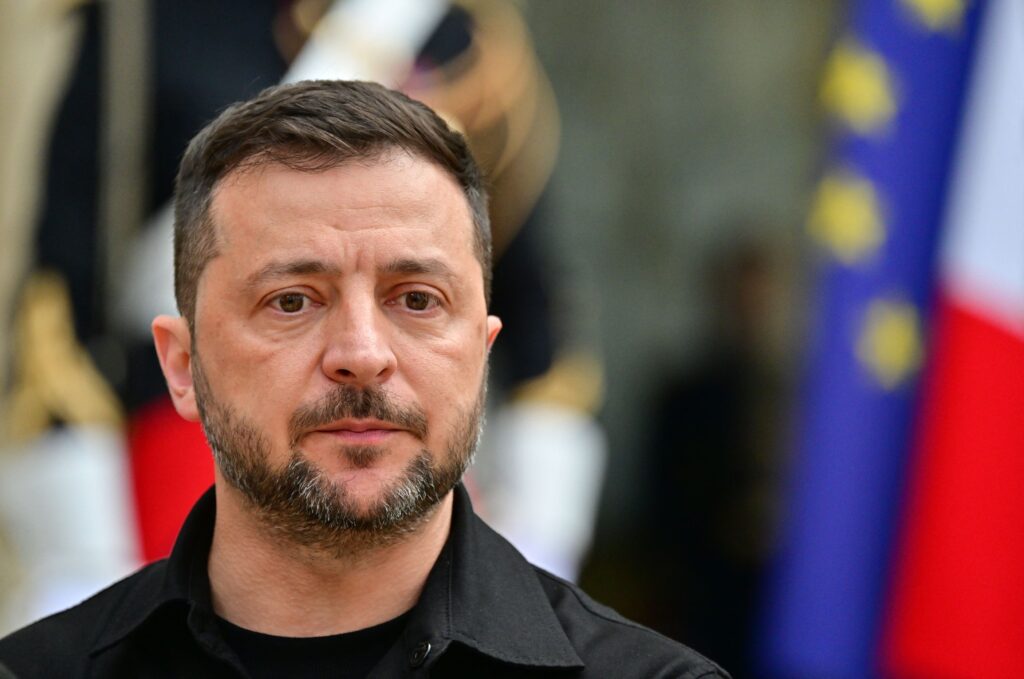
The influence of Andri Yermak, the head of the presidential administration office, is very strong. Yermak is a lawyer very close to Zelensky, with a very organized mind. He is the one who built the power vertical in Kiev.
The problem with Yermak was that, on behalf of the president, he tried to control more and more. Yermak seems to have been stronger than Medvedchuk was 20 years ago when he was the head of the presidential administration under President Kuchma.
Many say that Yermak abused his position, strengthening his position very much and annoying a lot of people. Ukrainians are very careful about a balance of power. That is, they make sure that no institution accumulates too much power, so Yermak was forced to resign.
I want to ask you what Romania is doing at this moment because it cannot be completely removed from this issue of the war unfolding at the border?
National Defense Strategy. To be honest, I tried to read it. In principle, I don't watch it. The National Defense Strategy must be written and drafted by the people who have won power, and then their political vision is transmitted to the military.
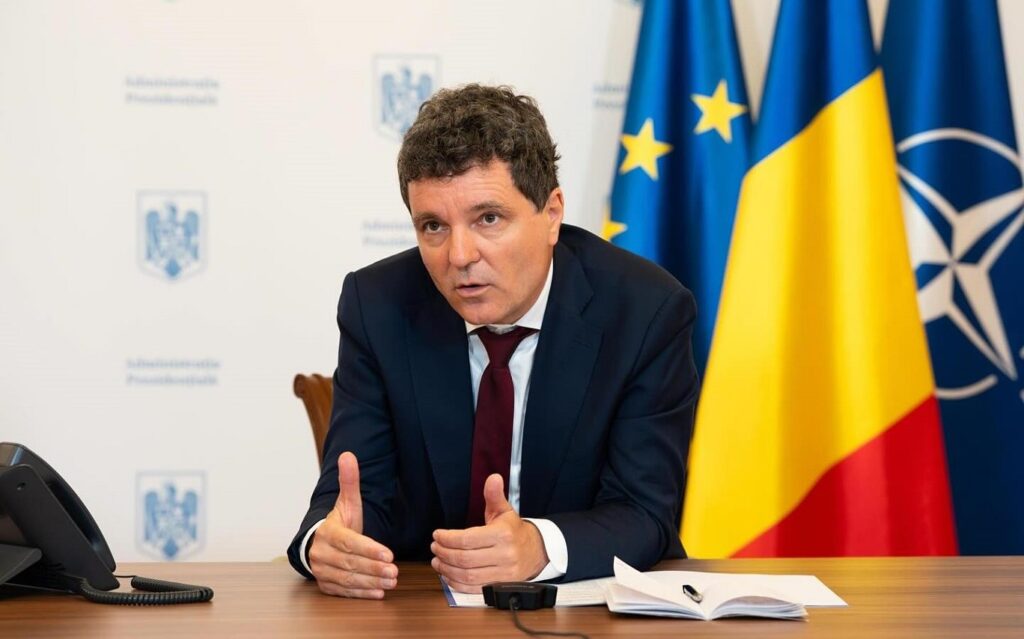
At our place, the process is happening in reverse. The military sent chapters of the strategy to Cotroceni. And Cotroceni, with a hand to its hat, executes what is written in the strategy. I understand what the military think and what their limits are. I am interested in what the people in power think, the people I voted for.
The relationship is exactly the opposite. And this says a lot about the nature of power in Romania.
In these conditions, how vulnerable is Romania in relation to any type of external threat?
Do you think the Russians have nothing better to do than to bring Romania to its knees? Or do you think it's so hard to bring Romania to its knees? I suppose they must stock up on popcorn and Coca-Cola to watch the show in Bucharest.
And then, they don't have to completely bring it to its knees. Wait a minute, Romania does a great service to the Russians by being a member of NATO and the EU. It gives them the opportunity to say: "NATO-EU, with Romania inside. Aren't you ashamed..." Those who canceled the elections played into Russia's hands, because they questioned Romania's adherence to minimum democratic standards.
Romania has lost all credibility. The Constitutional Court canceled the elections because the right people did not make it to the second round. Neither Georgescu nor Lasconi were presidential material. That's the explanation. This political regime, this power system, had to be preserved.
Politicians understand very well that they cannot touch special pensions, judges, prosecutors, the SRI, or the army, for the simple reason that they are the pillars of the regime. If you somehow weaken a pillar, everyone could pull the cart in one direction. And so they fight for the survival of their own regime. They want to keep the power, to benefit themselves.
In this context that you have presented, I want to ask you how you see the year 2026, both from the perspective of the conflict between Ukraine and Russia, but also what will happen in Romania?
If Russia wins, if Ukraine, with the help of Trump, is brought down, then Romania will also tip over. It will tip towards a Viktor Orban-style regime, sovereignist, semi-sovereignist. Romania is very susceptible to external influence.
Even this wave of sovereignism in Romania is primarily due to the context. If Trump had not won the elections, AUR would not have exceeded 10-12%.
The most important thing is to keep the uneducated, politically uncultured electorate captive.
Do you see any optimism regarding the current situation in Romania?
I don't know, I want to believe that we find resources to do some good things. There are, emerging now, I see, children from the new generation are interested. The fact that I have students around me who want to do and want to change and want to stay in Romania gives me hope.
There are still some who want to change things. They want to stay here, contribute to the modernization of the country. Romania, through these representatives of the new generation, has a future.
If there are more of them, they create a critical mass, they will succeed in changing something and truly showing this country a bit more European. I hope.