

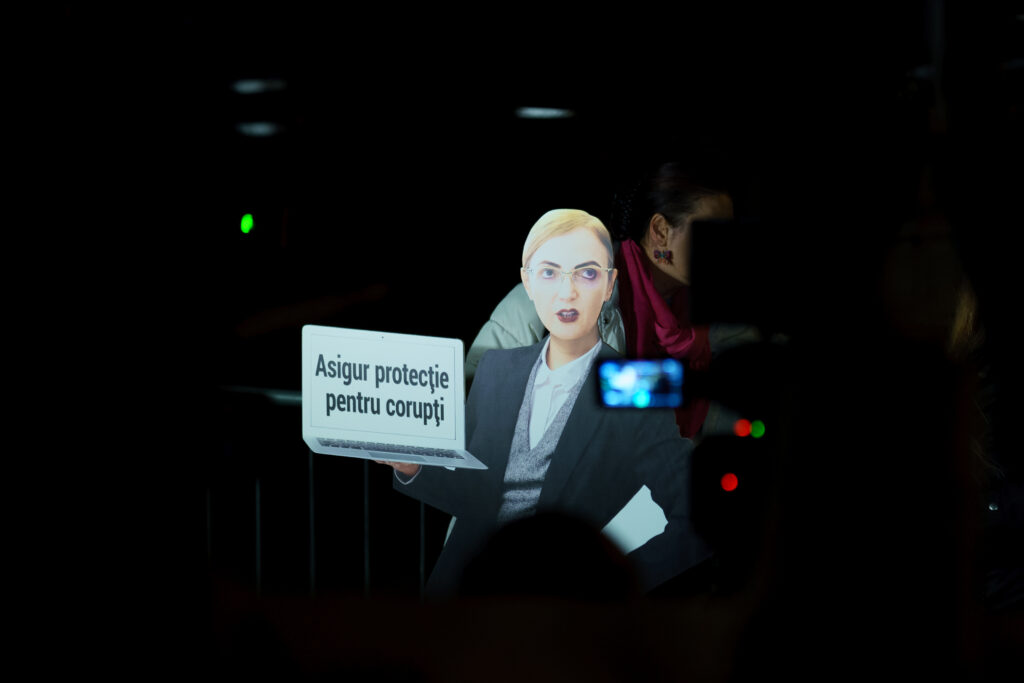
Judge Raluca Moroșanu recounted in an interview with Recorder, how Liana Arsenie, the head of the Court of Appeal Bucharest, organized the elections for the two positions in the management council that were to be filled by representatives of all judges.
In short, two magistrates under Arsenie’s control were imposed, and the ballot had only one box next to the names of the two.
It was impossible to vote against. If you had a different opinion, the vote was canceled.
This example is revealing in the context of the announcement made by Nicușor Dan, the President of Romania, who is calling for a referendum in January, within the magistrate profession - prosecutor or judge - to discuss the legitimacy of the CSM.
The Court of Appeal Bucharest overlooks the prohibitions for those directly admitted to the judiciary to transfer to other courts, approving delegations that are successively extended until the expiration of the 3 years, following which their transfer requests will be favorably resolved. The delegation mechanism is easier because it is completely lacking in transparency...
Nicușor Dan, the President of Romania, report on the situation in the justice system
If the referendum's organization is not carried out by independent structures, is not transparent, and the secrecy of the vote cannot be ensured, then the entire process will be compromised both in the eyes of the magistrates and in the eyes of public opinion.
CSM will urgently leave
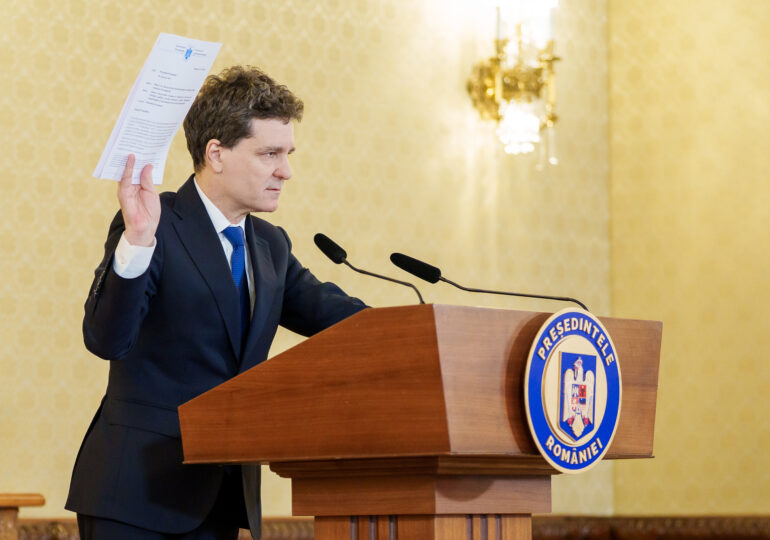
"I will initiate in January, immediately after the holidays, a referendum within the body of magistrates, with a single question: Is CSM acting in the public interest or is it acting in the interest of a group within the judicial system?," announced President Nicușor Dan in a press statement made on Sunday at the Cotroceni Palace.
"If the magistrates, as a whole, say that yes, CSM is acting in the public interest, we will continue discussions for legislative changes, but if the majority of them say that it does not represent the public interest, then CSM will urgently leave," added the President of Romania.
The decision to organize the referendum is surprising, courageous, and risky, being taken following the major crisis in Justice, caused by corruption allegations.
Nicușor Dan asked magistrates to "signal" the problems within the system by organizing consultations with their representatives.
"There were extremely few magistrates who expressed the intention to come to discussions compared to the one thousand people who signed the protest letter," said the President of Romania, noting that among judges and prosecutors in Romania, there is a great fear of taking a stand.
Many magistrates have been marginalized, their career advancement being blocked because they criticized the leadership of the courts where they worked, added Nicușor Dan, referring to the memoirs he received in the last week from prosecutors and judges.
Mafia-Style Terror
"...various things happened in these days, which my colleagues who have been in contact with... the magistrates have perceived...," stated Nicușor Dan, the President of Romania, indicating that some court managements exerted pressure on those willing to speak.
"...unusually, in certain institutions (courts) meetings were organized, on Monday, December 22 (the date when the meeting with the president was scheduled - ed.). There were messages of influence, intimidation," added the head of state, suggesting a mafia-like behavior from some CSM members and the Savonea group, the head of the Supreme Court.
"...many of those who wrote to us requested to meet, but not on December 22, precisely because there is a fear that participation in such a meeting will have repercussions," added Nicușor Dan.
"...we even reached inappropriate proposals, magistrates to come one by one, to stay in different rooms around here, so they don't intersect, or even my colleagues to pick them up from gas stations in Bucharest so that they are not seen entering the Cotroceni Palace," the President of Romania further declared.
"However, it is a very serious matter, we are not talking about human trafficking networks or who knows what, we are talking about the third power in this state," said Nicușor Dan, expressing genuine concern about the mafia-style way in which magistrates willing to speak about corruption in the justice system are being terrorized.
CCR, a Helping Hand Given to the President
In an obscure case concerning a law regulating certain research centers, the Constitutional Court made a decision that will have a major impact on the relationship between the President of Romania and Parliament.
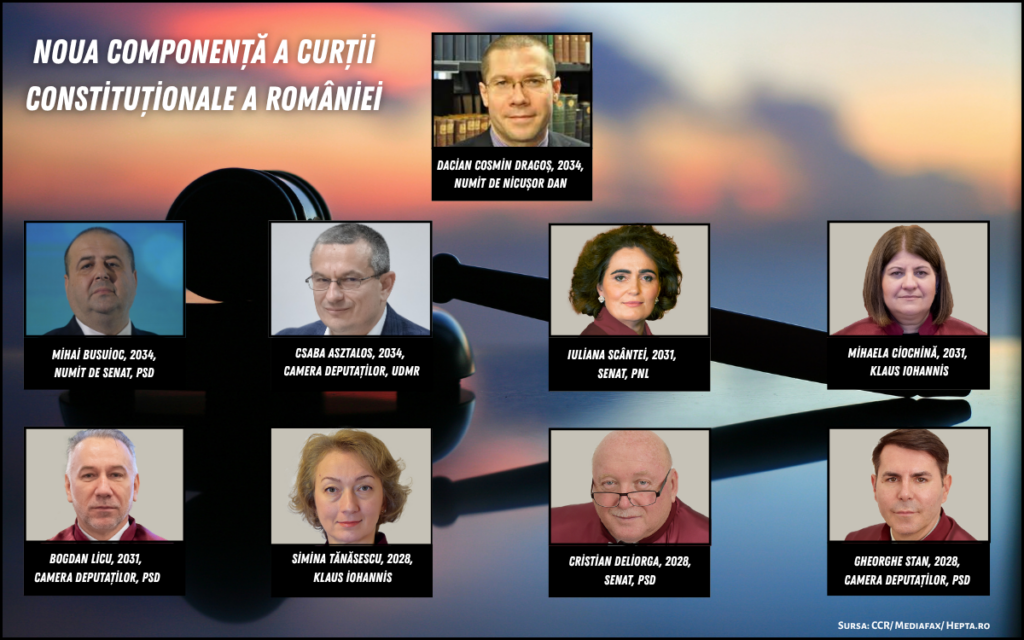
An important attribute of the head of state, that of referring matters to the CCR regarding a law passed by the legislative body, both on substance and form, even after it has been revised by Parliament following a CCR decision, has been reinstated by a majority of Constitutional Court judges.
Although it seems to be a discussion related to the field of legislative engineering, it must be emphasized that the decision will have major political effects, with the President of Romania once again having an important bargaining lever with Parliament.
The limitation of the President's ability to refer matters to the CCR only once and exclusively on issues related to the drafting form of the law was decided in 2018, under the pressure of Liviu Dragnea, who sought to strip the country's president of as many powers as possible.
"It is a return to the constitutional practice before 2018, which strengthens the role of the president as a guarantor of the Constitution's compliance," announced Nicușor Dan on Saturday, in a post on his Facebook page.
Justice System Reform
This decision indicates a change within the CCR, the liberal majority - and here it's not about a party, but about political vision, meaning support for democracy and the rule of law, begins to make its presence felt and to isolate CCR judges under PSD control, two of them being appointed according to Liviu Dragnea's wishes - Deliorga and Stan.
Another effect of the decision is related to a future situation in which PSD decides to leave the government. In the case of a minority government, with volatile support in Parliament, which can modify certain legislative proposals of the Executive, the President has the possibility to censor any excesses of the deputies and senators.
In the context of the crisis in Justice, the fact that a return to CCR jurisprudence from before the Dragnea era is observed also means a recognition of the current corruption in many courts, accused by a large part of public opinion, is real and needs to open the door to changes to regain citizens' trust.
The referendum announced by President Nicușor Dan is a courageous decision indicating the start of the largest reform of the justice system since Romania's accession to the European Union. Let's see how it will end.