

The political scandal triggered by Romania supporting the Mercosur agreement, without tariffs in trade between the European Union and South America, has alarmed farmers in the country, but also across the continent, due to the threat that the common market will be flooded with cheap agricultural and food products without respecting the quality standards of the EU. Such competition would cause bankruptcies and massive layoffs in the European agricultural industry.
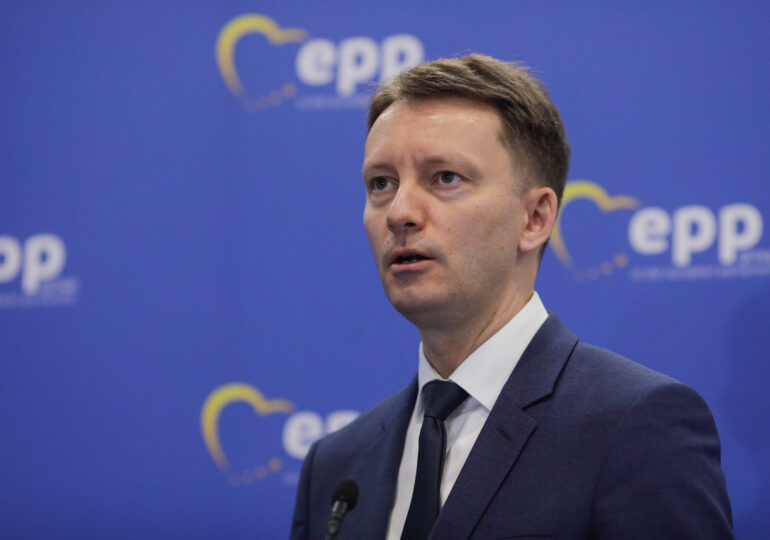
In an interview conducted by spotmedia.ro with Siegfried Mureșan (PNL), Member of the European Parliament, chief negotiator of the European Parliament with the European Commission regarding the multi-annual budget, he stated that there is political support for farmers to continue receiving significant financial support during the 2028-2034 period.
Relevant quotes:
- In the current budget (2021-2027), adopted before the Russian invasion of Ukraine, we allocated only 14 billion euros for defense at the EU level, a tiny and irrelevant amount after the start of the war. For the future budget post-2028, an increase to over 100 billion has been proposed.
- The European Commission came up with a proposal on July 16 - suggesting that security and defense, on one hand, and competitiveness, on the other hand, should be the new priorities of the EU budget.
- The budget for the last seven years was approximately 1.3 trillion euros. Now, the European Commission has proposed 2 trillion euros. In theory, it sounds like a significant increase, but where does this increase actually come from? And why is it an increase in nominal terms, while in real terms, we are at the same level?
- Romania has always had delays in absorbing European funds. However, every time the accounts were closed, we had absorbed a large part of the funds made available.
- In 2023 and 2024, there was a slow but steady erosion of Romania's credibility on the external stage.

You have published a statement in which you announce that you are requesting an increase of the European Union budget by 10%. Why do you think it is insufficient, even though the proposal is for 2 trillion euros, the largest so far?
The European Union budget is always organized in seven-year periods so that beneficiaries of European funds - national or local authorities, farmers, NGOs, SMEs - can have predictability, knowing which European funds will come, in which areas, and under what conditions.
We are currently in the 2021-2027 budget period and have started work on the European Union budget that will run from January 1, 2028, to December 31, 2034.
This is an important project because it will determine the priorities of the European Union for the next decade and the areas in which the European Union will invest the most.
The European Commission, in the budget proposal - as at the national level the government submits a budget project to the parliament, at the European level, the European Commission came up with a project on July 16 - proposes that security and defense, on one hand, and competitiveness, on the other hand, be the new priorities of the EU budget.
Is it an important change as I understand it. A shift from agriculture and regional development towards security, migration, and competitiveness?
We need to see if it is a shift or not. The European Commission says that we need to invest more in security, defense, and competitiveness. This is correct. We, the European Parliament, support it, and it is a good thing for Romania. With a war at our borders, the more the European Union helps us protect our external border, protect the cyber space, modernize defense capabilities, strengthen dual-use infrastructure (civil and military), and ensure that the armies of member states are well-equipped, the better.
These new priorities are correct. The question is how do we finance them. There are two possibilities: to allocate more funds to security, defense, and competitiveness while keeping the funds for traditional priorities - the Common Agricultural Policy and cohesion policy - at the same level, as requested by the European Parliament, or to reduce funds for cohesion and agriculture, as thought by the European Commission. I believe that the European Parliament is right, and the European Commission is wrong.
The 10% increase of the European budget that you have proposed, mandated by the European Parliament, is therefore one that aims to preserve the funds for agriculture and rural development intact?
Exactly. The European Commission proposes that the overall budget remain at the same level as before, 1.15% of the Gross Domestic Product of the member states.
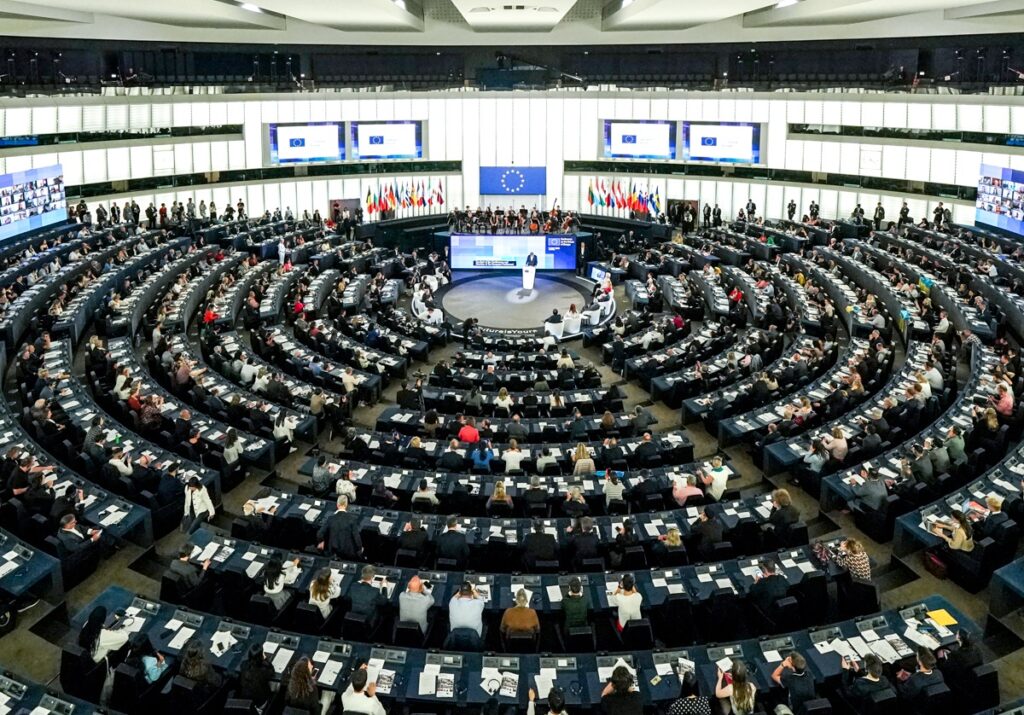
The Commission proposes that more money go into security and a relatively smaller part into agricultural and cohesion policy. We, the European Parliament, say this: if we want the European Union to do more and help us more, then it is natural to give it the necessary tools, and the budget is an essential tool. The European Union cannot do more with an equal or even smaller budget.
Therefore, the European Parliament's proposal is to keep the same amounts of money for agricultural and cohesion policy, adjusted obviously for inflation. Thus, in real terms, farmers and local authorities will be supported as before, but we will allocate more to security and defense.
Overall, the budget would be 10% higher than the European Commission's budget proposal, that is, 2.2 trillion euros. We request this increase to have funds for the new priorities without financing them at the expense of the traditional ones.
The traditional priorities have proven their viability: they support farmers, provide millions of jobs, support rural development, and guarantee food security. In times when national security is essential, I don't think we can compromise on food security.
I cannot contradict you. However, I want to ask you: in nominal terms, I have the feeling that this 2 trillion budget is the largest so far of the European Union. With that 10% increase, it would be a historic budget of 2.2 trillion euros. Is it true?
Yes, absolutely. Everything you say is correct and is an important statement. The budget for the last seven years was approximately 1.3 trillion euros. Now, the European Commission has proposed 2 trillion euros. In theory, it sounds like a significant increase, but where does this increase actually come from? And why is it an increase in nominal terms, while in real terms, we are at the same level?
The current budget (2021-2027) was presented by the European Commission in 2018, at 2018 prices. Since then, we have had quite a high inflation rate. The European Commission, presenting the project for the next seven years, has reported it at the current prices of 2028-2034, already adding the presumed future inflation rate. Essentially, it tells farmers how much they will receive in absolute terms in the future. However, we cannot compare prices from 2018 to those in 2034. If a farmer received 1 euro in 2018 and still receives 1 euro in 2034, it is evident that they will be able to afford fewer things. The value is much lower.
So, the difference between 1.3 trillion and 2 trillion comes from three situations:
- past and future inflation already taken into account;
- economic growth (because economies have grown, and the contribution as a percentage of GDP remains the same, even if the nominal amount increases)
- repayment of debts from the European Recovery and Resilience Mechanism (RRF). The non-repayable funds from the RRF must be somehow paid back at the European level, and the EU budget must participate in this repayment. The amount sounds large, but in relation to GDP, the burden is the same.
The amount of 2,000 billion sounded good to the public opinion, and the proposed increase sounds even better. However, people need to know one aspect: Since Romania's accession until today, it has contributed approximately 30 billion euros and absorbed around 100 billion. For every euro paid, we received 3 euros back. It is clear that a larger budget in the future will be beneficial for us. However, how are we doing with the absorption rate?
The situation is as follows: Romania has always had delays in absorbing European funds. However, whenever the accounts were closed at the end of the seven-year periods, we absorbed a large part of the funds made available.
For example, during the 2014-2020 period, when we had the N+3 rule (meaning three years after the budget period ended) and the funds were available until the end of 2023, Romania had an absorption rate of over 97%. Out of 46 billion euros, we lost around 2 billion, which is regrettable, but we managed to absorb over 44 billion euros in non-repayable funds.
Do you see a necessary extension in the current budget cycle?
Yes, it is necessary. The European Commission now proposes that funds be available during the allocated period plus only an additional 10 months, which I believe is too short.
In recent years, many member states have focused on the funds from the previous budget to avoid losing them. For example, in 2021, Romania had an absorption rate of 55% from the previous budget and reached over 95% by the end of 2023. Then we focused on the PNRR, as these funds are only available until 2026.
Due to this, Romania neglected absorption in the 2021-2027 budget exercise. Currently, the absorption rate is at around 20%. I believe we will surpass 60% by 2027 and will need about two more years to reach 100%. Without an extension, at least an N+2 rule, meaning until 2029, we risk not absorbing all the funds.
In the context of a challenging electoral year in 2025, the political crisis of 2024, and the societal unrest: how is Romania currently viewed in Brussels?
We must be honest and tell the truth. In the years 2023 and 2024, there was a slow but steady erosion of Romania's credibility on the international stage. There were delays in funding, a very large deficit of over 9% - irresponsible in a period without external shocks - and the issues from the presidential elections at the end of 2024, with those violations of the law by a candidate, followed by the president's resignation in February 2025.
Nevertheless, Romania has not become a problem case as it was during the time of Liviu Dragnea. This year, credibility has partly been restored. The first steps were the victory of the pro-European candidate in the presidential elections - a president who desires the rule of law over extremism - and the formation of the government led by Prime Minister Bolojan, who has already established himself as a reliable partner at the EU level.
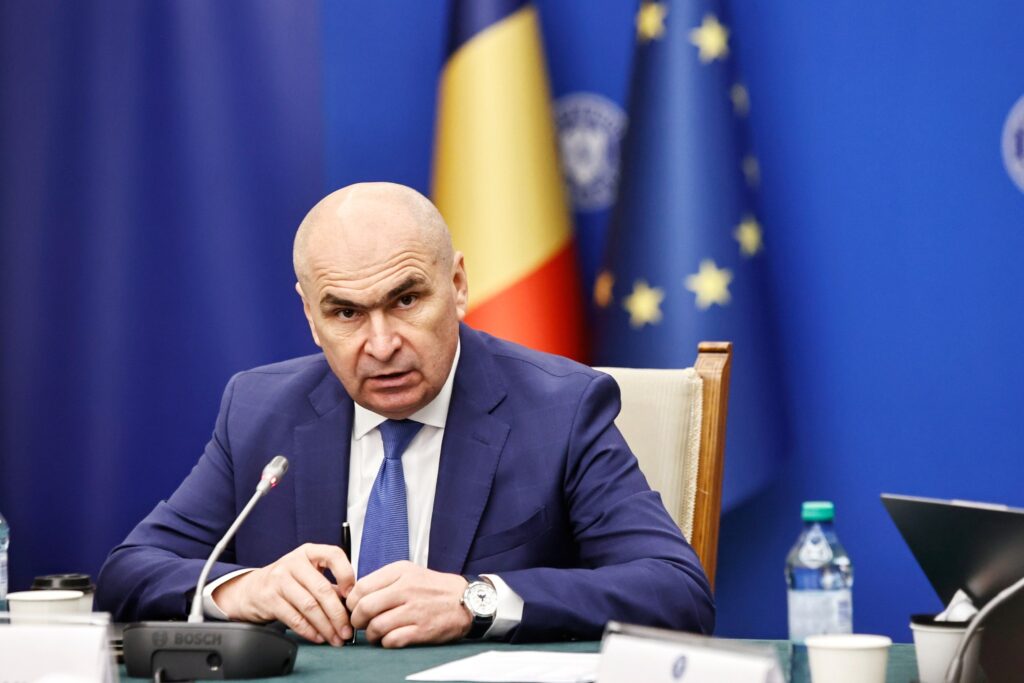
Prime Minister Bolojan has implemented two packages of structural reforms and fiscal-budgetary consolidation that will strengthen the economy. I believe we gravely underestimated the severity of the financial situation in the middle of this year. There was a risk of rating agencies downgrading us and starting a procedure to suspend European funds due to the uncorrected deficit from the previous government.
If the funds were suspended, construction sites would stop, unemployment would rise, and we would enter a recession. Through the measures taken, the Romanian Government has gained the trust of the Commission, reached an agreement on the deficit, and rating agencies have confirmed Romania's rating. However, it will take years to fully regain the lost trust.
How do you view the crisis in Justice in relation to the PNRR and special pensions?
The documentary by Recorder clearly showed that there are issues in Romania's judicial system.
We need to understand what is not working and find solutions, either by amending the legal framework or improving the system's management.
The role of politicians is to ensure a framework in which judges and prosecutors can work independently. If the system could not manage itself well, legislative bodies have the obligation to update the legislation to protect the citizen.
We are no longer in a time when the parliamentary majority was complicit in attacking the rule of law. This year's elections showed that Romanians desire modernization and European values. I hope we have a critical mass in the political class to address the issues in the justice system.
Do the President and the government have the capacity and necessary support to solve this crisis?
I believe they have this capacity, and the coming weeks will show how it will be translated into practice. It will be clear who wants a strong judiciary and who wants a controllable one. I believe the Prime Minister and the President desire an independent judiciary. It will be a litmus test for extremist parties, which will likely demonstrate that they do not truly desire justice and the sanctioning of those who break the law.
I cannot conclude without asking you about the European Commission's SAFE program. Romania would benefit from approximately 10 billion euros for military infrastructure and armament. Do we have the capacity to absorb this funding?
In the current budget (2021-2027), adopted before Russia's invasion of Ukraine, we allocated only 14 billion euros for defense across the EU, a meager and irrelevant amount post the war's onset. For the future budget post-2028, a proposed increase to over 100 billion has been suggested.
However, the European Commission realized that a solution was needed by 2028 to increase defense investments. Hence, the SAFE program was introduced: 150 billion euros that the Commission borrows and makes available to member states as extremely advantageous loans (low interest, repayment over 40 years, 10-year grace period).
Romania has presented investments of over 10 billion euros through this program. SAFE will likely conclude in 2027, as the new budget will address these needs, but it remains an essential tool to cover the current security deficit.
What are Romania's economic prospects for 2026, considering the pressure to reduce the trade and budget deficit from 8% to 6%?
I believe that 2026 could be the year when Romania will absorb the most European funds since accession to date. From the PNRR, we have over 10 billion euros to claim by August 31, 2026. We need to hasten and complete the projects. With good governance, I am convinced it will be a historic year.
Any disruption in governance - political instability, blockages - would severely impact us. But the conditions are favorable.
The Ministry of Finance's management of finances and the realistic renegotiation of the PNRR by the Ministry of Investments and European Projects have avoided sanctions and accelerated absorption. I hope things will continue earnestly and not stall.