
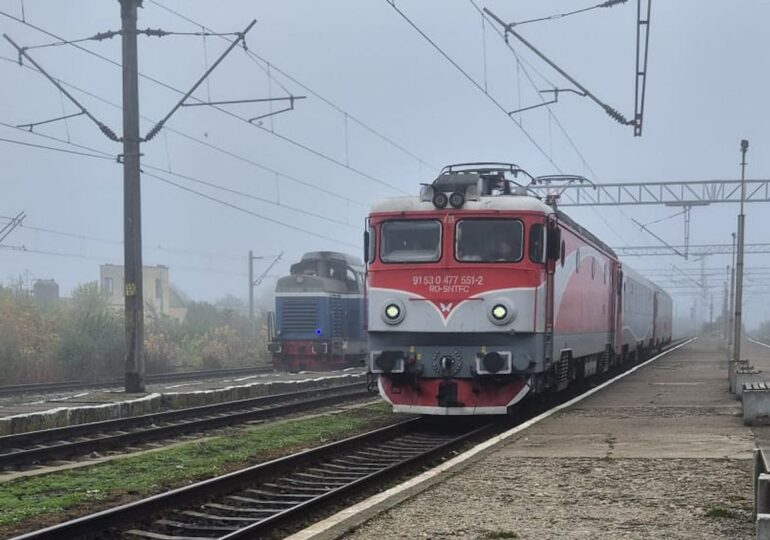
One of the largest cases investigated by DIICOT Timișoara has ended definitively with acquittals across the board, ten years after the large-scale searches that triggered the investigation.
93 individuals were sent to trial, accused of being part of a network that stole diesel fuel from the Timișoara Locomotive Depot – it was said that over 1,600 tons of fuel were stolen, causing a damage of 7.5 million lei.
In the first instance, 82 defendants were acquitted, while nine received sentences ranging from 4 years to 13 years and 4 months in prison. For two other individuals, the process ended as they had passed away.
However, on September 25, 2026, the Timișoara Court of Appeal radically changed the verdict: the nine convicted individuals were acquitted, and for the others, the basis of the acquittal was altered. The judges' final conclusion: "the deed does not exist."
The reasoning, which spans over 500 pages and was analyzed by Libertatea, reveals major issues with the DIICOT investigation, as well as with the sentence pronounced in the first instance by the Timiș Tribunal.
From 1,600 tons of stolen diesel to all-around acquittals
The case started in April 2016, when DIICOT Timișoara conducted searches at the Timișoara Locomotive Depot. Dozens of people were brought in for questioning, 25 were detained, and several individuals were placed under house arrest or in pre-trial detention.
The investigation was only completed in March 2022. DIICOT brought 93 individuals to trial for forming a criminal group, forgery, use of forged documents, and embezzlement.
According to the accusations, between 2013 and 2016, 1,611 tons of diesel fuel were allegedly stolen, amounting to around 7.5 million lei. The locomotives were reportedly fueled with less fuel than stated in the documents, and the surplus was taken out of the depot and sold on the black market.
DIICOT claimed there were over 3,300 embezzlement acts and over 18,600 falsified travel sheets.
Nine heavy convictions in the first instance
In October 2025, the Timiș Tribunal acquitted 82 of the defendants and sentenced nine other individuals to prison terms ranging from 4 years to 13 years and 4 months.
However, the Tribunal substantially reduced the damages calculated by DIICOT. Instead of 1,600 tons of diesel and 7.5 million lei, the court, based on an expertise, established damages of approximately 426 tons, valued at 2.1 million lei.
The case then reached the Timișoara Court of Appeal, where the situation changed completely.
One year of surveillance, without evidence of thefts
The Court of Appeal determined that the evidence did not demonstrate the existence of the criminal group nor the diesel thefts described by the prosecutors.
The judges noted that the surveillance measures lasted for approximately a year, without confirming the accusations. "From all the evidence presented in the case, including the phone conversations referred to by the prosecutor, it was not proven that the defendants engaged in such activity, mere suppositions not being sufficient to overturn the presumption of innocence," as stated in the final decision cited by Libertatea.
The court also analyzed how the diesel fuel was allegedly taken out of the depot. One of the prosecution's theories involved transferring it using a hose and an artisanal pump.
Despite the surveillance of the tank area and the investigators' ability to take photos and videos, there are no images of the hose, the fuel transfer, or any defendant carrying jerry cans of diesel.
The judges also noted that in three years of inspections, no surpluses or deficits in inventory were found, a situation deemed difficult to explain if the mechanism described by the prosecutors had been operational.
"It is inexplicable why a sting operation was not carried out"
The Court of Appeal also criticized the fact that the investigators did not set up a sting operation, even though, according to their own theory, they knew when and how the diesel was being taken out of the depot. "It is inexplicable why a sting operation was not carried out," the court noted.
According to the accusations, approximately 2,000 liters could be transferred in 20 minutes.
Issues also arose during the reconstruction. The hose found by the investigators was not long enough for the presumed fuel transfer route and had to be extended with another one.
The court also found that no one could identify who connected the hose to the depot's tanks and who started the system.
Key witness retracts statements
Another issue was the testimony of a homeless person living in a derelict building near the depot. During the investigation, this individual claimed to have helped the businessman accused in the case transport jerry cans of stolen diesel and that later the fuel was transferred through a hose.
However, the Court of Appeal considered that a supposed criminal activity carried out over three years could not be proven by the testimony of a witness who had been in the area for only about two months and whose statements were not corroborated by other evidence.
Furthermore, when faced with the Court of Appeal, the witness retracted his statements from the investigation and stated that during the reconstruction, he "did what the police told him to do."
Court of Appeal criticizes the tribunal as well
The criticisms from the appellate court did not stop at the DIICOT investigation. The judges noted that the Timiș Tribunal included "entire pages from the indictment" in the sentencing rationale and "did not analyze any defense from the defendants."
Moreover, according to the final decision, the first instance handed down convictions for crimes that had already been prescribed for about a year and a half.
Thus, after extensive searches, six years of investigation, 93 people brought to trial, and nine heavy convictions in the first instance, the "Diesel" case concluded definitively with the acquittal of all remaining defendants in the process, on the grounds that the alleged deeds do not exist.