
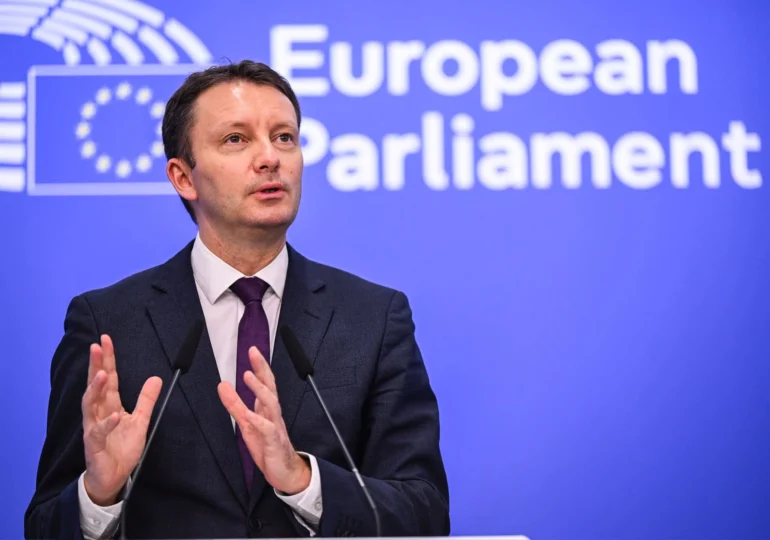
European Parliament rapporteurs reject Ireland’s proposal to reduce the future budget of the European Union by 8% for the period 2028–2034. Siegfried Mureșan, the Parliament’s chief negotiator for the multiannual budget, warns that the cuts would impact defense, competitiveness, agriculture, and regional development.
The proposal was presented on Saturday by Ireland, which currently holds the EU Council presidency, ahead of the upcoming week’s meeting of European leaders. It envisions a budget that is 8% lower than the one initially proposed by the European Commission, despite the European Parliament requesting an increase of around 10% back in April.
"As the chief negotiator of the European Parliament, I send a clear message: this negotiating position cannot be accepted by the Parliament. We reject it from the start because it does not take into account either the new priorities such as defense, competitiveness, nor the traditional priorities such as agriculture and cohesion," Siegfried Mureșan conveyed in a post on Facebook.
Mureșan: We cannot ask the European Union to do more while cutting its budget
The Romanian MEP highlights that the reductions proposed by the Irish presidency mainly target defense, competitiveness, and external action. Without the increases requested by the Parliament, funding for agriculture and cohesion policy would not reach the necessary levels.
"We cannot talk for four years about the need to better defend ourselves, only to now reduce the defense budget. We cannot talk for years about the need to increase the competitiveness of the European economy, especially in relation to China, only to now reduce the competitiveness budget," Mureșan asserts.
He warns that underfunding agriculture would contradict the European objective of food security. At the same time, reducing funds for cohesion would also affect regions near the conflict in Ukraine.
"We cannot ask the European Union to do more while cutting from the main source that allows the Union to act: its own budget," emphasizes the MEP.
Reductions for competitiveness and external action criticized by MEPs
According to the European Parliament's press release, the Irish proposal includes a 12.8% reduction in funds for competitiveness and a 17.4% cut for the EU's external action, which covers programs through which the Union supports partner countries, provides humanitarian aid, and responds to international crises.
Carla Tavares, the other lead rapporteur for the multiannual budget, warns that these cuts would limit Europe's ability to close the gaps in innovation and investments, support its partners, and respond to international crises.
Similarly, Mureșan states in the declaration transmitted through the European Parliament that Ireland's proposal would weaken the Union's capacity to act and make it less able to protect its citizens and compete with the world's major economies.
The MEP also notes that high inflation has reduced the European budget's purchasing power by 10%.
Dispute over new sources of revenue
Another dissatisfaction of the European Parliament is that the Irish presidency did not include the new revenue sources supported by MEPs in its proposal.
"And if member states want to reduce the pressure on national budgets when financing the EU budget, it is incomprehensible why the Irish Presidency did not include the European Parliament's proposals for own resources in the negotiation package," Mureșan states.
Among other proposals, the Parliament suggested taxes on digital services, online gambling, and capital gains from crypto-assets. These could bring approximately 30 billion euros in addition to the 57.4 billion already planned in the Commission's 2025 proposal.
"The future budget must have more courage and vision, not the accounting approach of a block administrator," the Romanian MEP emphasizes.
Without Parliament's agreement, the budget cannot be adopted
Siegfried Mureșan points out that the future multiannual budget must be unanimously approved by the governments of the 27 member states but also requires the European Parliament's agreement.
"The budget must be agreed upon unanimously by the governments of the 27 member states. But it cannot come into force without our approval, the European Parliament's approval," he stresses.
The MEP urges European leaders, who will meet next week, to consider the Parliament's position and calls on member states to reach a common position as quickly as possible so that final negotiations can begin and an agreement can be reached by the end of the year.
G.P.