
The CIA has declassified 71 intelligence reports about Osama bin Laden and Al-Qaida, transmitted to top American officials in the years leading up to the September 11, 2001 attacks. Some of the documents warned that the terrorist network could hijack a plane or use an aircraft loaded with explosives to attack an American city.
The documents total over 100 pages and cover the period from February 1998 to September 12, 2001, during the administrations of Bill Clinton and George W. Bush.
This is the most extensive release to date of reports of this kind, according to the CIA. The documents show how the threat posed by Al-Qaida gradually took shape, given that the information received by analysts was often vague, incomplete, or from sources whose credibility could not be confirmed.
The reports do not demonstrate that American authorities knew about the 9/11 attack plan. However, they do show that presidents and top security officials had been repeatedly warned that bin Laden intended to attack the United States, including on American soil.
Warning about an aircraft loaded with explosives
One of the most important notes is dated September 10, 1998, nearly three years before the attacks. The document indicated that bin Laden's "preferred option" was to strike the United States on its own territory, in Washington.
The report warned that Al-Qaida could use an aircraft loaded with explosives to attack an American city. The possibility of hijacking a commercial plane was also mentioned. According to the information received at that time, two suspected accomplices managed to pass through security checks during a test of the plan.
Another note, dated December 4, 1998, stated that bin Laden and his allies were preparing for attacks in the United States, with scenarios analyzed including hijacking an airplane.
However, the information was lacking essential elements such as the date, exact target, or the identities of those involved. Some of it came from sources considered questionable even by CIA analysts.
"Bin Laden is determined to strike in the USA"
Among the published documents is the well-known briefing from August 6, 2001, titled "Bin Laden is determined to strike in the USA," presented to President George W. Bush just over a month before the attacks.
The report mentioned that Al-Qaida members could already be residing in the United States and that the FBI had identified activities indicating preparations for plane hijackings or other attacks. It also mentioned surveillance of federal buildings in New York.
Seven of the reports now made public, drafted in July and August 2001, signaled an escalation of the terrorist threat, according to The Wall Street Journal.
A note from August 28 described Al-Qaida's operations as "professional and flexible." Analysts emphasized that the organization paid special attention to planning, security, and adapting to changing conditions, allowing it to remain a threat even when security measures were strengthened.
What was learned after the attacks
The most recent document in the collection is dated September 12, 2001. A source cited in that report claimed that the attacks had been planned for two years and that among the targets was the U.S. Capitol.
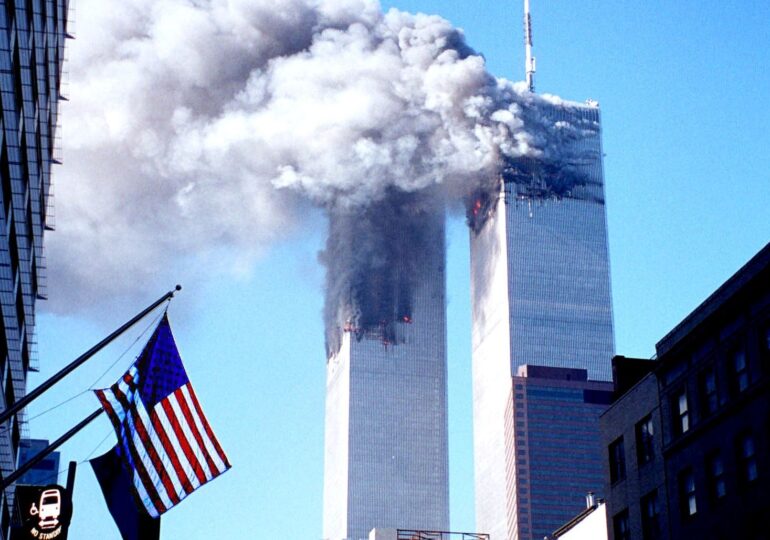
In the September 11 attacks, 19 Al-Qaida members hijacked four passenger planes. Two crashed into the World Trade Center towers in New York, while the third struck the Pentagon. The fourth plane crashed in Pennsylvania after passengers attempted to regain control. Nearly 3,000 people were killed.
The declassified documents largely confirm what the 9/11 Commission had already established. Its report, published in 2004, described the failure to prevent the attacks as a failure of imagination, policies, and coordination among American institutions. However, the new documents offer a more detailed picture of the warnings reaching the White House.
CIA Director John Ratcliffe described the release of the documents as "an exceptionally transparent gesture," made to honor the victims of the attacks and intelligence personnel who later died in counterterrorism operations.
The collection was released on the day the United States marked 25 years since the attacks. Concurrently, the U.S. National Archives made public another set of materials, including interviews conducted by the 9/11 Commission with officials from the Clinton and Bush administrations, according to Associated Press.
G.P.